AI-generated concept illustration. Not a photograph of a specific LEDECA product or installation.
A fine-pitch LED display is more than its packaging label. MIP is one approach to using small LED chips in display modules. Understanding how it works helps separate potential manufacturing advantages from the performance of a complete screen.
What does MIP mean?
MIP commonly stands for Micro LED in Package. Some manufacturers also use the term for Mini/Micro LED in Package. Small LED chips are assembled into packaged devices, which are then mounted onto the display module’s circuit board. The precise chip size, package design and number of pixels per device depend on the product.
MIP is a packaging approach, not a resolution standard. Ask for the actual chip and package specifications rather than assuming that every product using the name has the same construction.
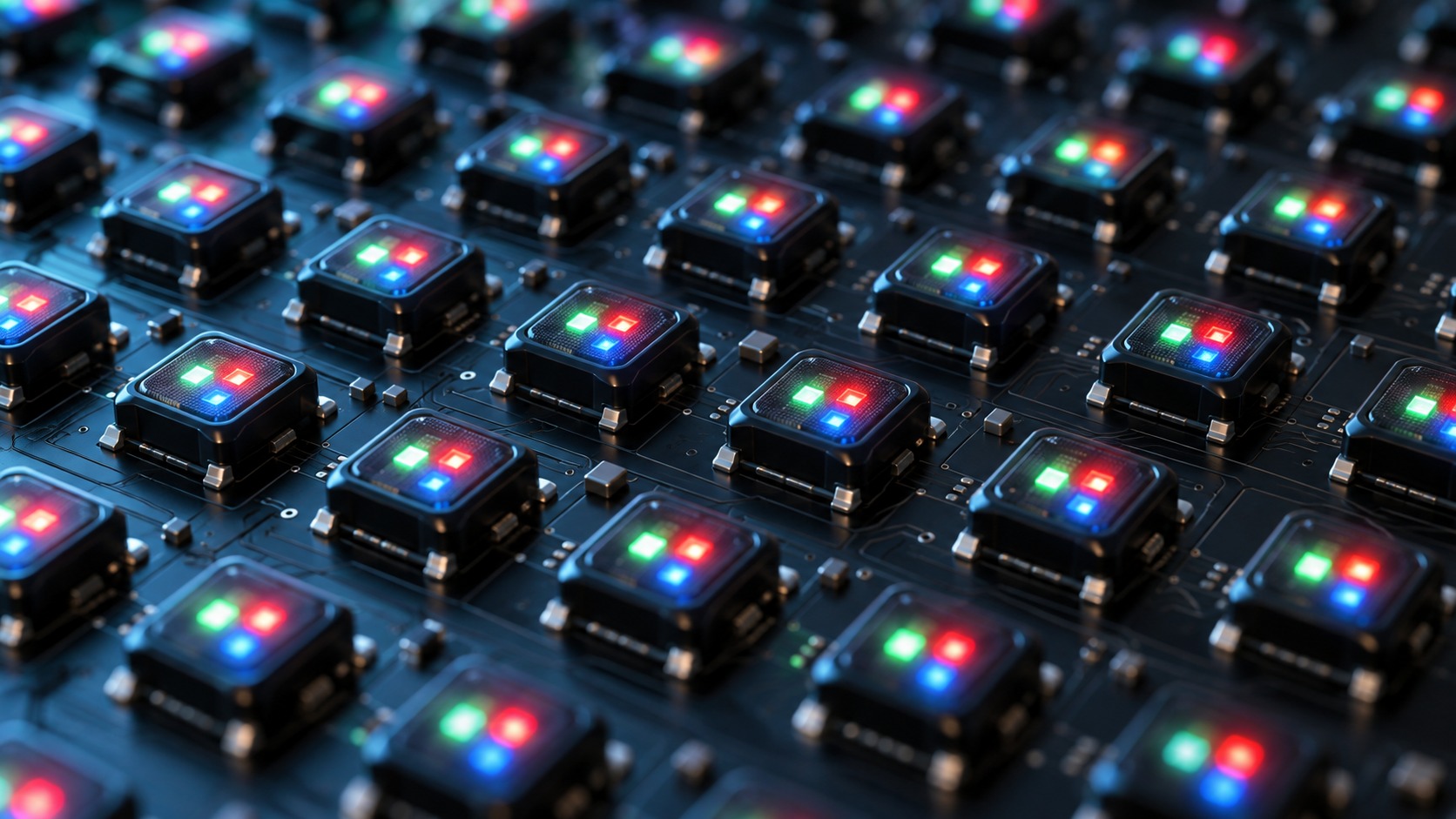 Concept illustration of packaged LEDs. This is not a technical drawing; package designs vary by product.
How does MIP work?
In a typical MIP route, LED chips are packaged, the resulting devices are tested and sorted, and selected devices are assembled onto the module board. Optical sorting and mixing can help manufacturers manage brightness and colour consistency. Calibration and quality control of the completed display remain important.
- 01LED chips
- 02Packaging
- 03Testing and sorting
- 04Module assembly
Simplified manufacturing flow. Actual processes vary by manufacturer and package design.MIP, COB and SMD: what is the difference?
MIP creates small packaged LED devices before module assembly. In a COB construction, bare LED chips are mounted directly onto the module substrate and encapsulated. Conventional SMD displays also use packaged LED components mounted onto a board.
These categories are not completely separate: MIP devices can be surface-mounted. The useful comparison is the specific chip, package and module architecture—not simply “MIP versus SMD”.
What benefits can MIP offer?
Small package designs can support fine pixel pitches. Depending on the construction, a larger proportion of dark surface between emitting areas can contribute to contrast. Package-level testing and sorting can support manufacturing consistency.
None of these points guarantees a particular contrast ratio, energy saving or viewing angle. Surface treatment, drivers, power supplies, calibration and ambient light all affect the finished result. Assess complete displays under comparable conditions.
 Concept scene: a meeting room with a large LED display. Assess image quality under the intended room lighting.
Where can MIP displays be used?
Potential applications include meeting rooms, control rooms, broadcast environments and other installations requiring detailed imagery. Suitability depends on the individual product. For close viewing, evaluate native pixel pitch and content readability. For camera use, test the screen with the intended camera settings.
 Concept scene: an LED video wall in a control room.
 Concept scene: an LED backdrop in a broadcast studio.
What should you check before choosing a display?
Compare image quality at the intended operating brightness, reflections under site lighting, power consumption under stated test conditions, service access and replacement procedures. Confirm which surfaces an IP rating covers. MIP alone does not guarantee outdoor suitability, waterproofing or easy on-site repair.
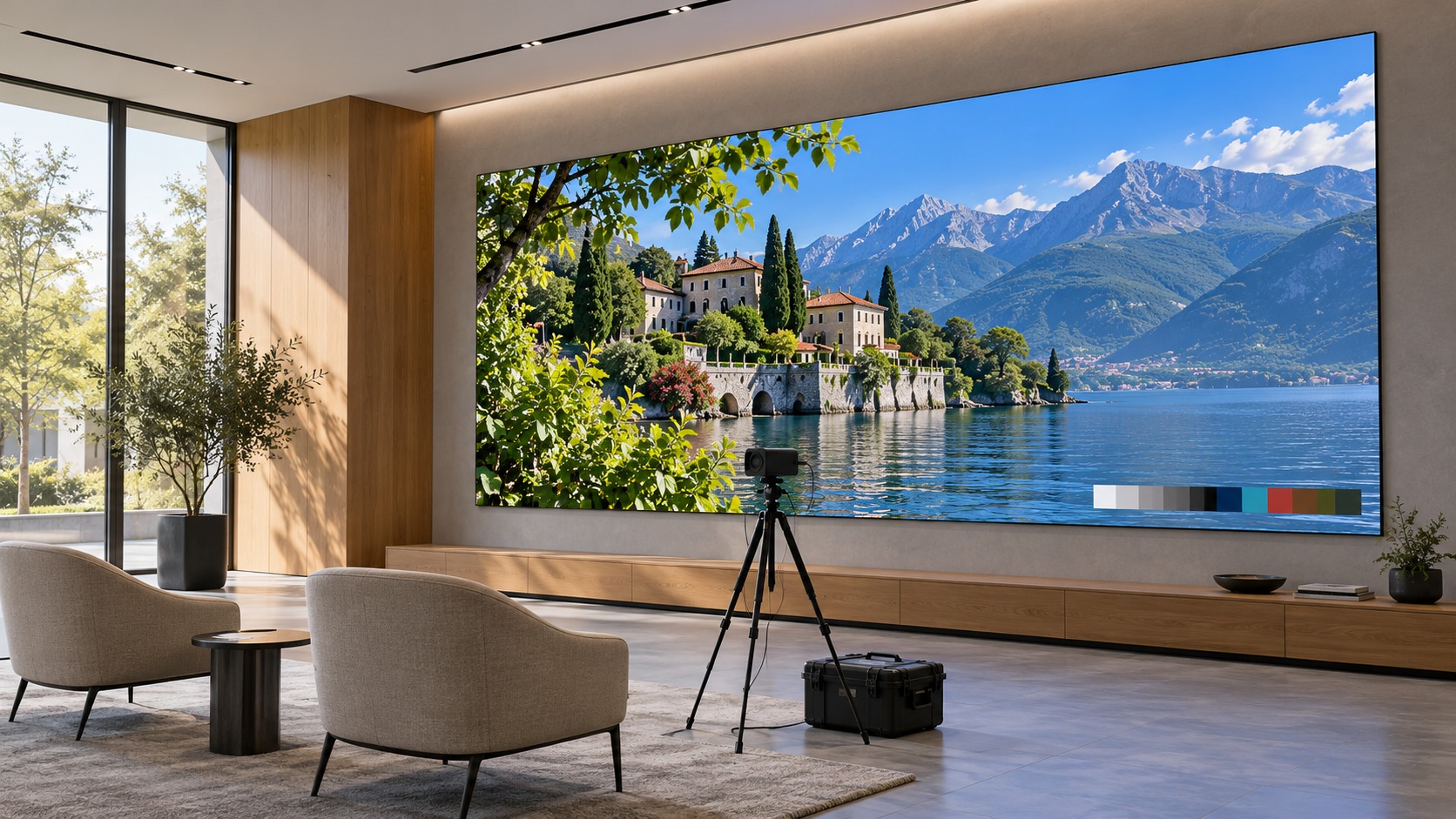 Concept scene: an LED display demonstration and evaluation area.
Is MIP always better than COB?
No. Both approaches can serve fine-pitch displays. Compare complete products against the project’s image requirements, operating conditions, maintenance needs and budget.
Does MIP automatically mean 4K?
No. Resolution is determined by the number of pixels across the active display area. Packaging technology alone does not determine resolution.
Is every MIP display a MicroLED display?
Terminology varies. Some suppliers use MIP for Mini/Micro LED packaging. Confirm the chip dimensions and technical definition used for the product.
LEDECA, ALWAYS BRIGHT!